

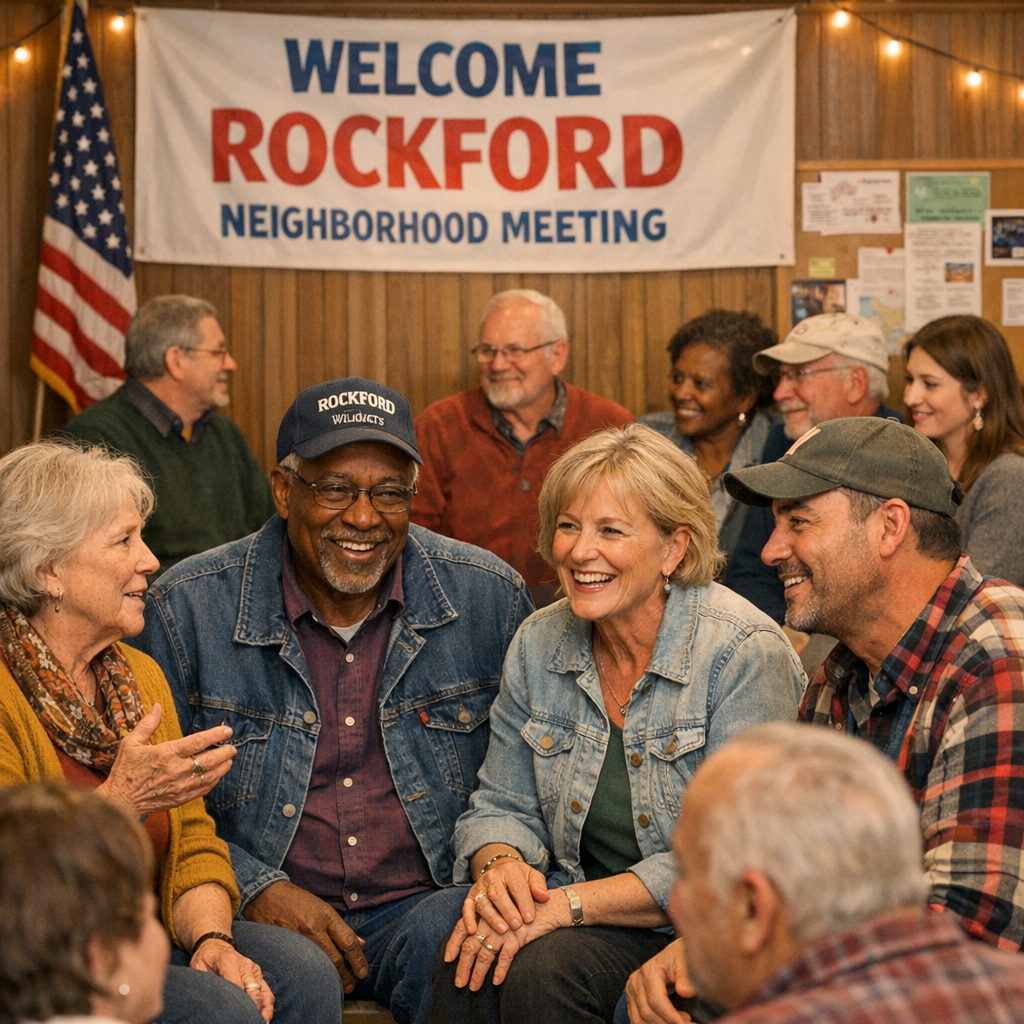
My name is Benjamin Garcia. Over the past several months, I’ve been speaking with Rockford residents from all walks of life—people raising kids here, caring for elderly relatives, starting small businesses, or simply trying to feel grounded in a changing city. What comes through again and again are shared concerns and also shared hope. Here are what people are saying, and what I think we might learn from it.
Housing and Belonging
Many folks say that finding an affordable, safe, well-maintained home isn’t just about shelter—it feels like the foundation of belonging. From long-time owners trying to keep up homes in older parts of town, to renters facing rising costs and patchy repairs, there’s a sense that Rockford’s housing landscape hasn’t kept up with its population’s needs. One resident noted that “transitioning from low-income housing to affordable, single-family homes is a culture shift.” Another emphasized that housing help should include upkeep—roof fixes, code enforcement, clearing overgrown lots—not just new buildings.
Safety, Community, and Youth
Safety comes up everywhere—not just in terms of crime statistics, but in daily life. Parents want their kids to walk home without worrying. Neighbors want streetlights, well-maintained sidewalks, stop signs enforced. Youth need safe spaces—not just to hang out, but to be mentored. Extra credit often goes to organizations offering after-school programs, mentoring, and creative outlets. One person said, “We need more youth programs to mitigate crime/violence.” Another described the challenge of speeding through neighborhoods every day, making kids’ play feel unsafe.
Food, Health, and Access
Accessibility carries deep meaning. In some neighborhoods, grocery stores are far and getting healthy food is expensive. Health clinics feel far away. For seniors and folks without transportation, what feels like “access” often depends on whether there’s a bus route that actually goes close, whether sidewalks are safe, and whether the community is built for people, not cars. Residents tell me that services often exist—but they aren’t equally easy to use. Geographical gaps matter, especially when health, food security, or mobility are at stake.
Civic Pride, Participation, and Perception
One of the most surprising things I heard: people are frustrated not just with what hasn’t changed, but how others talk about Rockford. One person said the loudest criticisms tend to come from those “who haven’t lived in the area in a long time” or who “see nothing but what the cameras show.” Meanwhile, people working in neighborhoods every day see small but real wins—cleanups, murals, youth arts events, coordinated services. They believe the narrative should recognize that Rockford is more than its challenges.
What Might Move the Needle
- Expanding and improving maintenance and repair programs so people can keep their homes safe and clean instead of being forced to leave.
- Investing more in youth programs, especially mentoring, arts, after-school and summer options, anchored in neighborhoods.
- Increasing grocery, clinic, and transit access in underserved areas—making healthy living easier and daily errands safer.
- Creating more platforms for civic participation—town halls, community liaison projects, storytelling—so that everyone feels seen and heard.
- Improving neighborhood infrastructure: sidewalks, streetlights, pedestrian crossings, speed enforcement—all the small details that change experience, not just numbers.
None of this is easy. The needs are real, and sometimes the resources aren’t there. But what keeps coming back in my conversations is this: people want to be part of Rockford’s story—not just witnesses to its problems. And when neighbors, organizations, and local leaders work together, a change in tone can become change in reality. That’s the kind of Rockford people want to live in.